On This Page
- Why Search Traffic Needs Its Own Page
- How Landing Pages Affect Quality Score
- Message Match in Practice
- What the Page Should Include
- Matching the Page to Search Intent
- Choosing Between Calls and Forms
- Speed and Mobile
- Transparency and Trust
- Tracking Conversions
- Testing Your Google Ads Pages
- Common Mistakes
- Google Ads Landing Page FAQs
A Google Ads landing page should repeat the promise of the ad and the searcher's keyword, offer one clear action, load quickly on mobile and make it easy to convert. That combination improves conversions directly, and it also supports landing page experience, one of the three components Google uses to calculate Quality Score alongside expected click-through rate and ad relevance.
The most important principle is message match: the page should feel like the obvious next step after the ad someone just clicked.
The Google Ads Page Checklist
- Headline matches the keyword and ad.
- One offer and one call to action.
- Fast and easy to use on mobile.
- Clear, honest information about the offer.
- Conversion tracking on the thank-you page.
Why Search Traffic Needs Its Own Page
Search visitors are different from social or email visitors. They typed a specific query, saw an ad that promised a specific answer and clicked because they want that answer now. Sending them to your homepage makes them hunt for it, and many won't.
A dedicated page lets you match the search exactly. Someone searching "emergency boiler repair" should land on a page about emergency boiler repair, not a general heating services page.
How Landing Pages Affect Quality Score
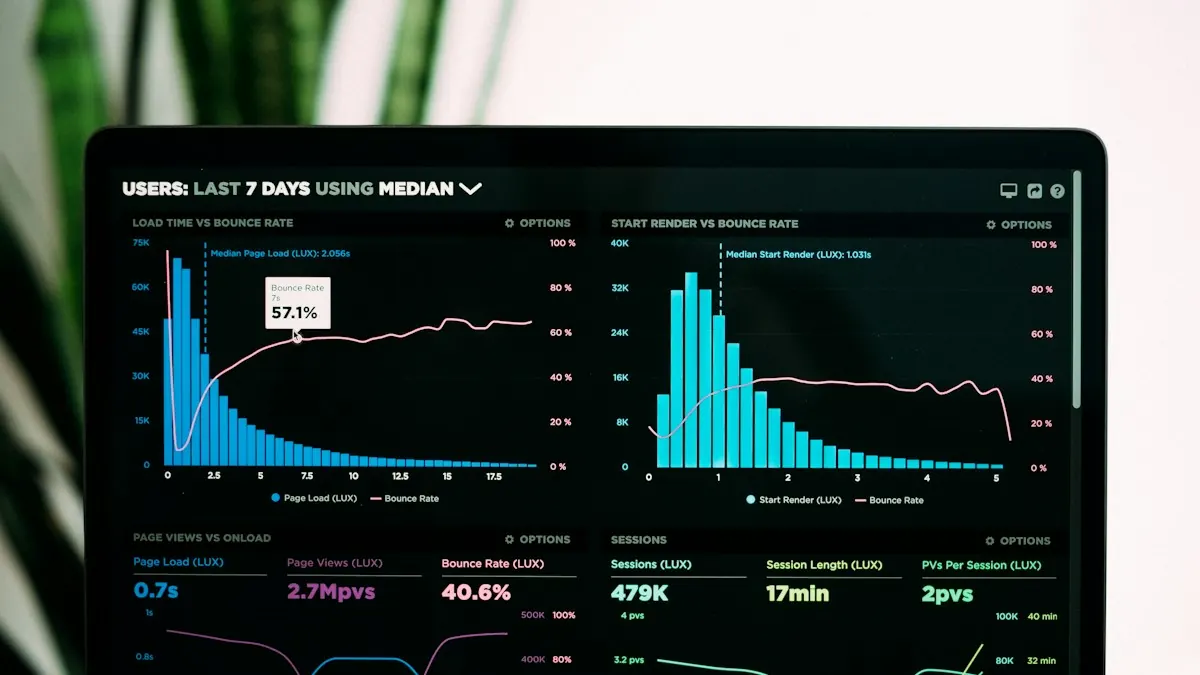
Google rates keywords on a Quality Score from 1 to 10, based on three components.
| Component | What It Reflects | How the Landing Page Helps |
|---|---|---|
| Expected click-through rate | How likely the ad is to be clicked | Indirectly, through relevant ads you can write for a focused page |
| Ad relevance | How closely the ad matches the search intent | A focused page lets you write tightly matched ad groups |
| Landing page experience | How useful and relevant the page is to people who click | Directly: relevance, clarity, speed and ease of use |
Google's own guidance on improving landing page experience includes keeping messaging consistent from ad to page, offering useful and relevant content, and making pages easy to navigate on any device. A higher-quality experience can improve ad rank and costs over time, though Quality Score is a diagnostic rather than a guarantee of cheaper clicks.
Message Match in Practice
Message match means the headline, offer and wording on the page echo the keyword and ad.
Example: Message Match for a Local Service
Search: "same day dishwasher repair"
Ad headline: Same-Day Dishwasher Repair, Upfront Pricing
Weak landing page headline: Welcome to City Appliance Services
Strong landing page headline: Same-Day Dishwasher Repair With Upfront Pricing
Supporting line: Book a technician today. You'll know the price before any work starts.
The strong version confirms instantly that the visitor is in the right place. The weak version makes them read further to find out, and many won't.
Matching Many Keywords Without Many Pages
If you have many ad groups, you don't have to build a page for each. Dynamic text replacement changes the headline based on the ad's link, so one page can match many keywords. Our dynamic text replacement guide explains how it works.
What the Page Should Include
- A headline that matches the keyword and ad.
- A short supporting line with the key benefit or proof point.
- The form or call button above the fold, especially on mobile.
- Three to five benefit bullets that address what searchers care about: speed, price, quality, availability.
- Trust signals: real reviews, credentials, guarantees you honor, and clear contact details.
- An FAQ covering pricing, process and service area.
- A repeated call to action further down the page.
For local services, add the service area and phone number prominently. Many search visitors on mobile prefer to call.
Build Google Ads pages that match your keywords. Leadpages Grow includes dynamic text replacement and A/B testing, with no traffic caps.
Try LeadpagesMatching the Page to Search Intent

Different searches signal different levels of readiness. The page should match where the searcher is.
| Search Type | Example Query | What the Page Should Lead With |
|---|---|---|
| Urgent service | "emergency plumber near me" | Phone number, availability and service area |
| Price-focused | "bathroom remodel cost" | Price ranges or a quote form, with what affects price |
| Comparison | "best payroll software for small business" | Why your option fits, with a clear comparison |
| Branded | your company's name | Your main offer and a direct way to buy or book |
| Problem-focused | "how to stop dog barking at night" | A helpful answer that leads to your product or service |
A single page can't serve all of these well. Group your keywords by intent first, then build or adapt a page for each group.
Choosing Between Calls and Forms
For local services, phone calls often matter as much as form submissions. The right main action depends on urgency.
- Urgent needs such as repairs and emergencies: make the click-to-call button the main action, with the form as a backup.
- Planned purchases such as renovations: a quote form lets you collect project details before calling back.
- Business-to-business services: a booking or demo form usually works best, with a phone number for those who prefer to call.
Whichever you choose, track both. A page that seems to convert poorly on forms may be generating calls you're not counting.
Speed and Mobile
A large share of search clicks happen on phones. A slow or awkward mobile page wastes paid clicks before visitors read a word.
- Compress images and avoid large background videos.
- Keep the headline, offer and button visible on the first screen.
- Use large, easy-to-tap buttons and form fields.
- Use click-to-call for phone numbers.
- Test the live page on a real phone, not just the editor preview.
Transparency and Trust

Google's landing page experience guidance also emphasizes trustworthiness. Make it easy for visitors to understand who you are and what they're getting.
- Show your business name and contact information.
- Explain what happens after someone submits the form.
- Link to your privacy policy if you collect personal information.
- Avoid misleading claims, hidden pricing or pages that promise one thing in the ad and deliver another.
Tracking Conversions
Set up conversion tracking so Google Ads knows which clicks lead to leads or sales. The simplest method is firing a conversion tag on the thank-you page after a form submission, plus tracking calls if phone leads matter.
When Google Ads knows which clicks convert, its automated bidding can aim for more of them. Some landing page tools also send offline conversions back to Google Ads, so bidding learns from leads that qualify later. Leadpages offers Google Ads conversion integrations on its Optimize plan. Our Leadpages for paid ads guide covers the setup.
Testing Your Google Ads Pages
Search campaigns often have steady traffic, which makes them good candidates for A/B testing. Start with the elements that affect the decision:
- Headline: test two angles, such as speed versus price.
- Offer: a free quote versus a discount on the first visit.
- Form: short versus slightly longer with a qualifying question.
- Call versus form: for urgent services, test making the phone number the main action.
Measure cost per lead, not just conversion rate, since a page that converts slightly less but attracts better leads can be the better result. Our A/B testing guide explains how to run fair tests.
Common Mistakes
- Sending all ads to one generic page.
- Headlines that ignore the keyword.
- Forms buried below long introductions.
- No phone number for urgent local services.
- No conversion tracking, leaving bidding to guess.
For industry-specific advice, see our local business landing page guide and our SaaS landing page guide.
Google Ads Landing Page FAQs
Does the landing page affect Google Ads Quality Score?
Yes. Landing page experience is one of the three components of Quality Score, along with expected click-through rate and ad relevance.
Should every ad group have its own landing page?
Your highest-spend ad groups often benefit from dedicated pages. For many smaller ad groups, dynamic text replacement can match keywords on a single page.
What is message match?
Making the landing page headline and offer echo the keyword and ad the visitor clicked, so they instantly know they're in the right place.
Should a Google Ads landing page have navigation?
Usually not. Removing the menu keeps visitors focused on the single action, while still including contact details and a privacy policy link for trust.
How do you track Google Ads conversions from a landing page?
Add the Google Ads conversion tag to your thank-you page, and track calls if they matter. Some builders also send offline conversions back to Google Ads.